Can't Sleep After Being Scammed? Why the Replay Happens
The 3am replay is not a sign that something is wrong with you. It is what a brain does when it has been through a threat it could not predict, and it usually fades as the threat stops being live. What helps is closing the open loops, not forcing yourself to stop thinking about it.
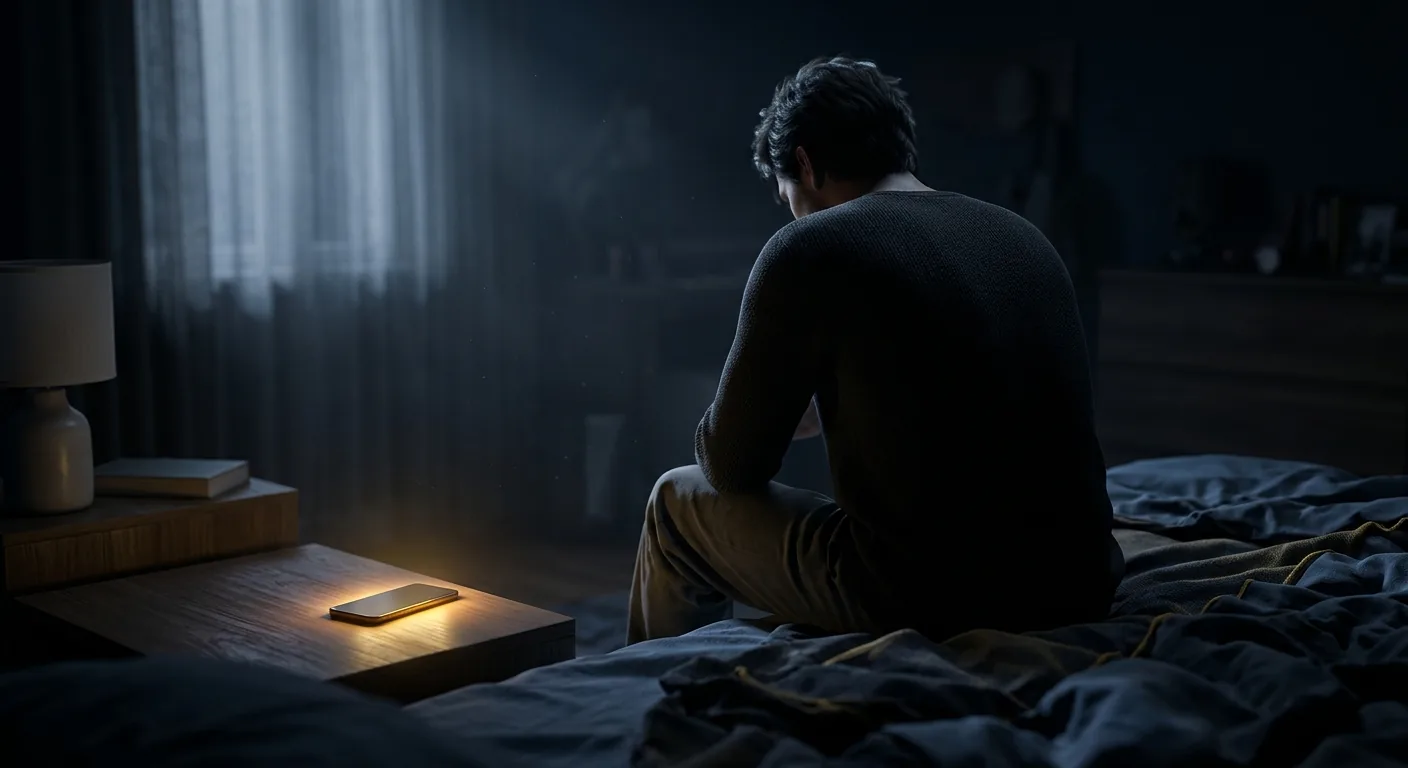
Can't Sleep After Being Scammed. The Replay Is a Threat-Processing Loop
The Short Version: Can't Sleep After Being Scammed? Why the Replay Happens
- Intrusive replay after a scam is a normal threat-processing response, not a personal failing and not a sign of weakness.
- The loop is fed by open questions: what happens next, who else knows, whether the money is gone. Closing those loops reduces the replay more than trying to suppress it.
- Write the timeline down once, in full. Externalising it stops the brain rehearsing it for storage.
- Fix the practical threats first, because a live threat keeps the alarm system on. Bank, passwords, reports.
- If sleep is still broken after four to six weeks, or you feel hopeless, that is a reason to see a clinician, not to try harder alone.
Why your brain keeps replaying it at night
When something threatening happens that you did not see coming, the brain treats the gap in its model as unfinished business. During the day you can outrun it with tasks. At night there is nothing to outrun it with, so it runs the sequence again, looking for the moment where the outcome could have changed.
This is the same mechanism that produces intrusive memories after any frightening event. It is not a moral judgement and it is not a symptom unique to fraud. What makes scam-related replay distinctive is that it comes bundled with shame, and shame is what stops people telling anyone, which is what keeps the loop running.
There is a second driver that is easy to miss: the threat may still be live. If the scammer still has your number, if a password is unchanged, if a "recovery" firm is calling, your nervous system is correctly reporting that the danger has not ended. No amount of breathing exercise will quiet an alarm that is accurately detecting a real problem.
Close the open loops before you try to sleep better
Sleep hygiene advice fails on scam victims because it treats a symptom while the cause is still active. Do these first, in this order, and most people find the 3am waking reduces within a week or two.
- Change the passwords that matter. Email first, then banking, then anything that shares that email. Doing this converts "they might still have access" into "they do not".
- Block the channel. The number, the profile, the email. Not because it stops the loss, but because every new message restarts the alarm.
- File the reports. FTC at ReportFraud.ftc.gov, FBI at ic3.gov, and your bank. Filing is not about recovery; it is about converting an open-ended threat into a closed administrative process.
- Write the timeline once, in full. Dates, amounts, what you were told, what you did. One page. This is the single most effective step for stopping the mental rehearsal, because the brain stops rehearsing what it no longer needs to store.
- Tell one person. Not a forum, not a support group yet. One person who knows you. Secrecy is the fuel line for shame, and shame is the fuel line for the replay.
Notice that none of these are sleep interventions. They are threat-closure interventions, and they work on sleep indirectly. If you do all five and sleep is still broken after a month, that is a different problem and the next section applies.

The shame is usually worse than the money
Ask people a year after a scam what still hurts and most do not describe the amount. They describe the moment they realised, and the fear of being seen as foolish. That fear is what keeps the story secret, and the secret is what keeps the replay going.
It is worth being precise about what actually happened. These operations are run by teams with scripts, training, and a pipeline of victims. They are designed to defeat exactly the instincts that make a person careful: they build rapport over weeks, they never ask for anything unusual until the pattern is established, and they manufacture urgency at the one moment the victim is least able to check. Being taken is not evidence of low intelligence. It is evidence of being targeted by people who do this for a living.
- Say the amount out loud to one person. The number loses power when it stops being a secret.
- Separate the decision from the person. "I made a decision with the information I had" is accurate and it is not the same as "I am stupid".
- Expect anger to arrive after the shame. It usually does, and it is a healthier stage. Direct it at the operation, not at yourself.
- Do not perform being fine. The performance costs energy you need, and it teaches the people around you that the topic is closed.
Practical sleep measures that actually apply here
Standard sleep advice is written for people whose problem is a busy mind. Yours is a threat loop, so the useful measures are the ones that interrupt rehearsal rather than the ones that relax you.
| Measure | Why it works for this specific problem | What it will not fix |
|---|---|---|
| Keep a notepad by the bed | Writing the thought down tells the brain it has been captured and does not need rehearsing. This is the highest-yield single change. | The underlying threat, if it is still live. |
| Set a fixed "worry window" in the early evening | Gives the loop a scheduled slot, which reduces its claim on 3am. | Acute panic in the first days. |
| Get out of bed after 20 minutes awake | Stops the bed becoming the place where the replay happens, which is how short-term insomnia becomes conditioned insomnia. | The first week, when nothing works reliably. |
| No banking apps in bed | Checking the balance at 2am restarts the loop with fresh data every time. | The urge to check. Expect to break this rule twice. |
| Daylight and movement in the morning | Anchors the sleep rhythm, which is what carries you through a period of poor nights. | Grief, which needs its own time. |
| Limit alcohol as a sleep aid | It shortens time to sleep and then fragments the second half of the night, which is exactly when the replay happens. | The desire for relief. |
If you are already taking something to sleep, prescribed or otherwise, tell a clinician what happened. Sleep medication that is fine for a short crisis is a different calculation when the underlying driver is an ongoing stress response.
When to get help, and where
Most people improve without treatment. Some do not, and the difference is worth naming plainly because the cost of waiting is high and the help is ordinary.
- Sleep is still broken after four to six weeks, or you are functioning badly during the day because of it.
- You are avoiding ordinary things such as opening email, checking the bank, or answering the phone, weeks after the event.
- You feel hopeless, worthless, or that people would be better off, or you have thoughts of harming yourself. This is a reason to contact a crisis line today, not a reason to try harder.
- Someone in your household is being affected, particularly a child or a partner who is carrying the fallout.
In the United States, the 988 Suicide and Crisis Lifeline is available by call or text on 988, and it takes calls about financial crisis as well as mental-health crisis. A general practitioner can refer for talking therapy, and employee assistance programmes often provide a fixed number of sessions at no cost. Victim-support organisations in many states offer counselling specifically for fraud victims, and the state attorney general's consumer division can usually point to them.
The money side, so it stops being a 3am question
A large part of the night-time loop is unanswered financial questions. Answering them in daylight, in writing, removes the material the loop works with.
- Write down the actual number. The real loss, not the feared one. Most people are carrying a figure in their head that is worse than the statement.
- List what is still open. A dispute in progress, a recall request, a report filed. Give each one a next date, so it stops being an open-ended worry.
- Decide the debt question once. If the loss was borrowed money, the debt guide covers the options. Deciding once is what stops the nightly re-litigation.
- Set a rule about checking. Once a day, at a fixed time, and not in bed. The rule matters more than the discipline.
If the practical steps are still unclear, the guide for people who lost their savings and the first-hour tutorial cover the sequence. Neither will make the replay stop on its own, but both remove the open questions that feed it.
Questions people ask about can't sleep after being scammed? why the replay happens
Is it normal to not sleep after being scammed?
Yes, and it is one of the most commonly reported effects. Intrusive replay and broken sleep are normal responses to a threat you did not see coming, and they usually reduce as the practical threat is closed and the event is processed. It is not a sign of weakness or of a permanent condition.
How long does it take to feel normal again?
There is no published timeline for scam victims specifically, and anyone who gives you a fixed number is guessing. What is observable is that most people report improvement over weeks rather than days, and that the improvement tracks the closing of practical open loops such as passwords, reports and disputes more closely than it tracks time alone.
Why do I keep replaying the moment I realised?
Because the brain treats an unpredictable threat as unfinished business and rehearses the sequence looking for the point where the outcome could have changed. Writing the timeline down once, in full, is the most effective way to signal that the sequence has been stored and does not need rehearsing.
Should I tell people what happened?
Telling one person you trust is strongly associated with reduced shame, and shame is what keeps the replay going. You do not owe an announcement to everyone. Start with one person who knows you, and decide about the wider circle later.
When should I see a doctor or therapist?
If sleep is still broken after four to six weeks, if you are avoiding ordinary activities weeks later, or if you feel hopeless or have thoughts of harming yourself. In the United States the 988 Suicide and Crisis Lifeline is available by call or text on 988, and it takes calls about financial crisis as well as mental-health crisis.
Does the shame ever go away?
For most people it reduces substantially, particularly once the story is no longer secret and the loss is no longer an open question. It tends to fade faster when the person can separate the decision they made from their judgement of themselves, which is usually helped by talking to someone who has heard the same story from many others.
Get the open questions onto one page
The report builder turns the timeline, the amounts and the open disputes into a single document, so the questions stop arriving at 3am.
Primary sources and further reading
- 988 Suicide and Crisis Lifeline — 988lifeline.org
- FTC — ReportFraud.ftc.gov — reportfraud.ftc.gov
- FBI IC3 — File a Complaint — ic3.gov
- NIMH — Post-traumatic stress disorder — nimh.nih.gov
- FTC Consumer Advice — How to avoid a scam — consumer.ftc.gov
Related guides
Information only. We never promise recovery.