Do Banks Refund Crypto Scams? What Actually Happens
The short answer is usually no, and the reason is structural rather than a matter of bank policy. A crypto purchase is an authorised transfer to a third party, not a payment the bank can reverse. But "usually no" is not "never", and the exceptions are specific enough to be worth knowing before you call.
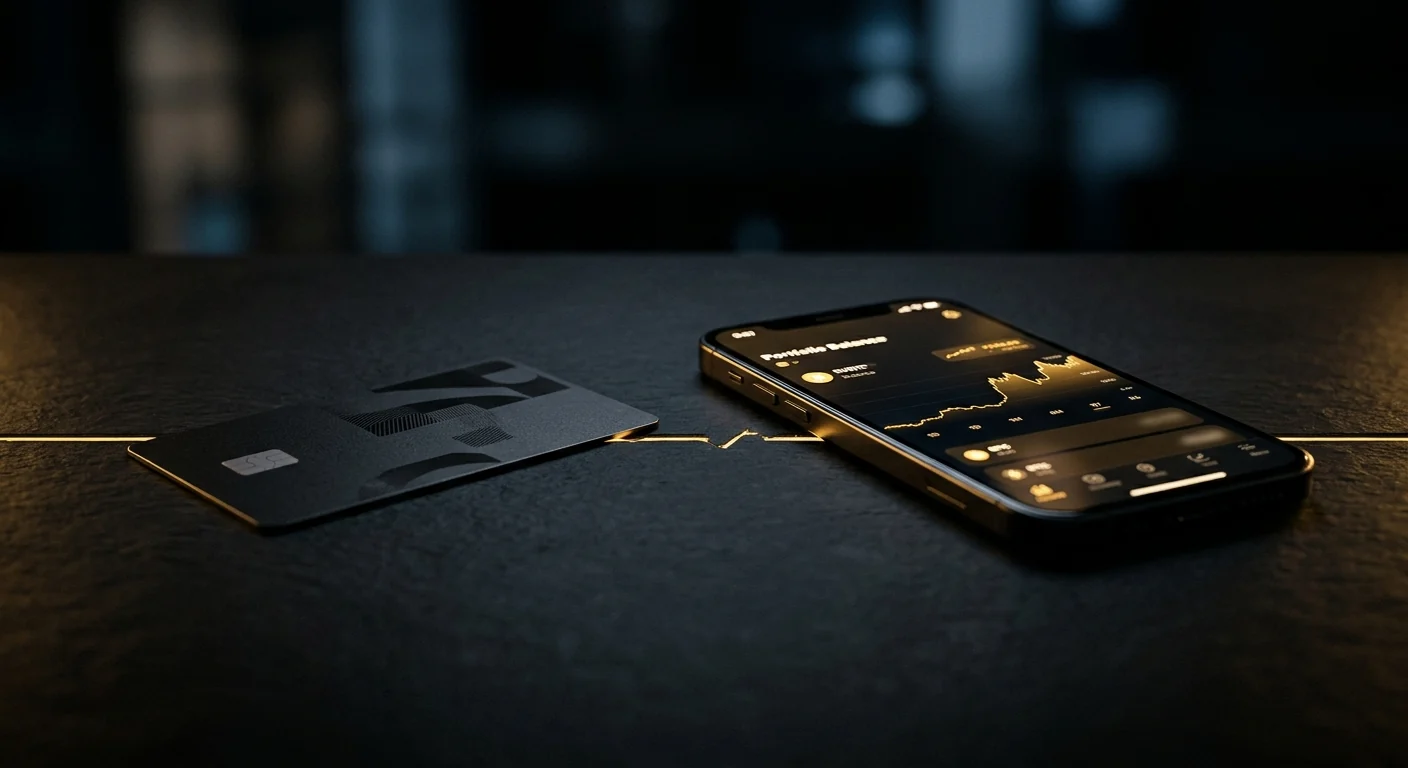
Your bank can sometimes act on the on-ramp, not on the chain. The transfer you authorised to an exchange is the only part of the loss a bank ever touches.
The Short Version
- A card purchase of crypto can sometimes be disputed; a bank transfer to an exchange usually cannot.
- The three routes that can still work are the on-ramp exchange, the receiving bank if fiat was involved, and law enforcement seizure.
- Authorised push payment rules differ sharply by country — the UK has a reimbursement scheme, the US does not have an equivalent.
- Speed is the only variable you control: a freeze request within hours is worth more than a perfect complaint filed in a month.
Why a Crypto Transfer Is Not a Card Payment
Card payments carry a dispute right because the card network built one. If goods never arrive, or a merchant is fraudulent, the issuer can charge the transaction back and the merchant's acquirer absorbs it. That mechanism exists because the network sits in the middle and can move money backwards.
A crypto purchase is different in three ways that each remove the mechanism.
- You authorised it. The bank's obligation is to execute your instruction, and it did. "I was deceived about what the money was for" is a different claim from "I did not authorise this", and the second is the one that triggers a refund.
- The money left the banking system. Once fiat is converted and the crypto is sent on-chain, there is no counterparty in the card network to charge back. The receiving party is a wallet, not a merchant account.
- There is no reversal layer. Blockchain settlement is final by design. No bank, exchange or regulator can un-send a confirmed transfer. This is the same property that makes tracing possible and recovery hard.
So the honest framing is this: your bank is not refusing out of indifference. It is being asked to reverse something it has no mechanism to reverse. What it can do is act on the banking leg — the transfer to the exchange, the receiving account, the card purchase — and that is where every realistic route begins.
The Three Routes That Can Still Work
Each route depends on where your money was at the moment you realised. Identify which one applies before you spend time on the others.
| Route | When it applies | What you actually do | Realistic odds |
|---|---|---|---|
| 1. The on-ramp exchange | You bought crypto on a centralised exchange and sent it to the scammer from there | Contact the exchange's fraud team with the deposit reference, the withdrawal transaction hash and a police report number. Ask for an account freeze on the receiving side if it is also on their platform. | Best of the three, and still dependent on speed and on where the funds landed |
| 2. The receiving bank | Fiat was wired or transferred to an account you now believe was a mule or a fraudulent business | Ask your bank to raise a recall with the receiving bank immediately. Provide the exact transfer details and the reason. | Narrow window — often hours, sometimes a day or two |
| 3. Law enforcement seizure | Funds are identified at a service that will act on a legal order | File with IC3 and local police, provide the trace, and follow up with the assigned investigator | Slow, low per-case probability, but the only route that reaches self-custody |
Note the ordering. Route 1 is a phone call you can make in ten minutes. Route 3 is a process measured in months. Most people spend their first week on route 3 because it feels like the serious option, and by then route 1 has closed.
Route 1: The On-Ramp Exchange
This is the most underused route, and it is the one where a bank-style refund logic actually has a chance, because the exchange is a regulated intermediary holding an account in your name.
What to send them, in one message:
- The deposit reference and date for the fiat you used to buy the crypto.
- The withdrawal transaction hash, the amount, the asset and the destination address.
- A one-paragraph factual account: what you were told, when, and by whom.
- Your police report number, if you have one. This is the single item that moves a case from a support queue to a fraud team.
What you are asking for is specific: a freeze on the receiving account if it is held on the same platform, and a record of the withdrawal that can be attached to a legal request. You are not asking them to reverse the chain, because they cannot.
If the destination address belongs to a different exchange, the exchange you used can still help by confirming the withdrawal and, in some cases, contacting the receiving platform. That inter-platform request carries far more weight coming from a compliance team than from a victim.
Our free wallet tracer tells you which service the destination address belongs to, which is the first thing the exchange will ask.
Route 2: The Receiving Bank, If Fiat Was Involved
If any part of your loss moved as fiat — a wire to a "trading platform", a transfer to an account number, a payment to a broker — then a bank recall is possible in principle, and the clock is the whole story.
A recall works like this: your bank sends a request to the receiving bank asking it to return the funds. The receiving bank checks whether the money is still there and whether the account holder consents. If the funds have been withdrawn, the recall fails. If the account is already flagged, it may succeed.
Three things improve the odds materially:
- Call, do not email. A phone call reaches a fraud team in minutes. An email enters a queue.
- Use the word "fraud", not "mistake". A mistaken payment and a fraudulent inducement are handled by different teams with different powers.
- Have the exact details ready. Date, amount, receiving bank, account number, reference. A recall request with an incomplete reference is a recall request that bounces.
If the transfer was a wire, our guide to wire transfer scam reversal covers the recall mechanics and the specific language that gets a case escalated. If you need to put the request in writing, the bank dispute letter template is built for exactly this.
Route 3: Law Enforcement Seizure
This is the only route that can reach funds sitting in a self-custody wallet, and it is also the slowest and least certain. It works when a trace identifies the funds at a service that will honour a legal order, and when an investigator has the capacity to act.
What makes a case actionable, in the order investigators care about it:
- A clean transaction map. Addresses, amounts, timestamps, hashes, and the services each address belongs to. Not a narrative — a table.
- A named category. Investment fraud, romance-led fraud, impersonation, marketplace fraud. The category determines which unit handles it.
- Documented contact. Messages, emails, platform handles, phone numbers. The conversation is evidence of intent; the chain is evidence of transfer.
- A filed complaint with a number. IC3 gives you a complaint ID. Local police give you a report number. Both are required before most exchanges will act.
Set expectations honestly: seizure is a by-product of an enforcement action against an operation, not a service provided to an individual victim. Your report contributes to the pattern that triggers the action. That is a real contribution, and it is rarely a fast one.
Why "Authorised Push Payment" Rules Differ by Country
The single biggest variable in whether a bank refund is even theoretically available is where you bank, because some jurisdictions have created a reimbursement obligation for authorised push payment fraud and most have not.
| Jurisdiction | Framework | What it means for a victim |
|---|---|---|
| United Kingdom | APP fraud reimbursement rules administered by the Payment Systems Regulator, with mandatory reimbursement for qualifying transfers | The strongest position globally. Report to the bank immediately; the rules have time limits and a excess threshold. |
| United States | No general APP reimbursement right. Regulation E covers unauthorised electronic transfers, not authorised ones induced by fraud | Refund depends on the rail (card vs wire vs ACH) and on the bank's own policy, not on a statutory right. |
| European Union | Instant payment verification obligations and evolving fraud liability rules | Depends on member state implementation and on whether the bank's verification duties were met. |
| Australia, Canada | Sector codes and voluntary frameworks rather than a statutory reimbursement right | Outcome varies by institution; escalation to the ombudsman is often the effective step. |
If you are in the UK, the practical consequence is that the bank has a defined process and a deadline, and asking for it by name gets you routed correctly. If you are in the US, the practical consequence is that the rail matters more than the argument: a card purchase has a dispute right, a wire has a recall window, and an authorised ACH transfer sits in between.
What to Say to Your Bank
Keep it to four sentences and one request. Fraud teams triage on clarity.
Then have these ready, because you will be asked for them: the transaction date and amount, the receiving bank name, the account number and sort code or routing number, the reference, your police report number, and any message that shows what you were told.
Three things not to do. Do not describe it as a mistake — that routes you to a payments correction team with no fraud powers. Do not accept "there is nothing we can do" as a final answer without asking for the fraud team specifically and for the complaint procedure. Do not wait for a perfect file; a recall request filed today beats a complete one filed next week.
What to Expect and When
Realistic timelines, so you can tell the difference between a slow process and a closed door.
| Step | Typical timing | What "good" looks like |
|---|---|---|
| Bank acknowledges the fraud report | Same day to 3 days | A case reference and a named team |
| Recall request sent to receiving bank | 1 to 5 days | Confirmation that a request was raised, not just logged |
| Receiving bank responds | 1 to 4 weeks | Funds held, or a clear statement that they were withdrawn |
| Card dispute decision | Up to 45 to 90 days depending on jurisdiction | A provisional credit while the dispute runs |
| Exchange fraud team response | 3 days to 3 weeks | A freeze confirmation or a request for the legal order |
| Law enforcement follow-up | Months, often none | An assigned investigator and a request for the trace |
If a bank tells you the funds were withdrawn before the recall arrived, that is usually the end of that route, and it is worth saying so plainly rather than pursuing it for months. The remaining options are the exchange route and the enforcement route, and both need the same thing from you: a documented trace.
For the wider picture of what is and is not reversible across payment types, our guide to whether your bank will refund you covers the general case, and crypto chargeback explains why the term itself is a misnomer.
Questions people ask
Do banks refund crypto scams?
Usually not, because a crypto purchase is an authorised transfer rather than an unauthorised card payment, and once funds move on-chain there is no mechanism to reverse them. Exceptions exist: a card purchase of crypto can sometimes be disputed, a fiat transfer to a fraudulent account can be recalled if it is caught quickly, and an exchange can freeze a receiving account on a valid request.
Will my bank refund a crypto scam if I report it quickly?
Speed improves the odds but does not create a right. A recall request filed within hours has a real chance if the funds are still in the receiving account. A request filed weeks later usually fails because the money has moved. Reporting quickly is the only variable you control.
Can I dispute a crypto transaction with my bank?
You can dispute the banking leg — the card purchase or the fiat transfer — but not the on-chain transfer itself. A card purchase of crypto may fall under chargeback rules depending on the issuer and the merchant category. A bank transfer to an exchange is generally treated as authorised and is not reversible.
What is the difference between a card dispute and a bank recall?
A card dispute is a formal chargeback right under network rules, with defined timelines and a decision. A bank recall is a request from your bank to the receiving bank asking it to return funds, which succeeds only if the money is still there and the receiving bank cooperates. The first is a right; the second is a request.
How long do I have to report a crypto scam to my bank?
There is no single legal deadline, but the practical window is short. Recall requests are most effective within 24 to 48 hours. Card disputes typically must be raised within 60 to 120 days depending on jurisdiction and network rules. Report the same day you realise, and do not wait for a complete file.
Check the address before you send anything
A free scan reads public chain data in your browser: balance, activity, counterparties and flags. No wallet connection, no seed phrase, no signup.
Primary sources and further reading
- FBI Internet Crime Complaint Center — the US federal portal for reporting crypto fraud
- FTC ReportFraud — consumer fraud reporting and payment-method guidance
- Payment Systems Regulator (UK) — the APP fraud reimbursement rules and their scope
- CFPB Complaint Portal — US consumer complaint route for bank and payment issues
Related guides
Information only. We never promise recovery.