How to Find Your Bitcoin Address on an Exchange
Every exchange gives you a Bitcoin deposit address, and almost every exchange gives you a different one each time you ask. That is not a bug — it is address rotation, and understanding it prevents the two most common mistakes: using an old address and using the wrong network.
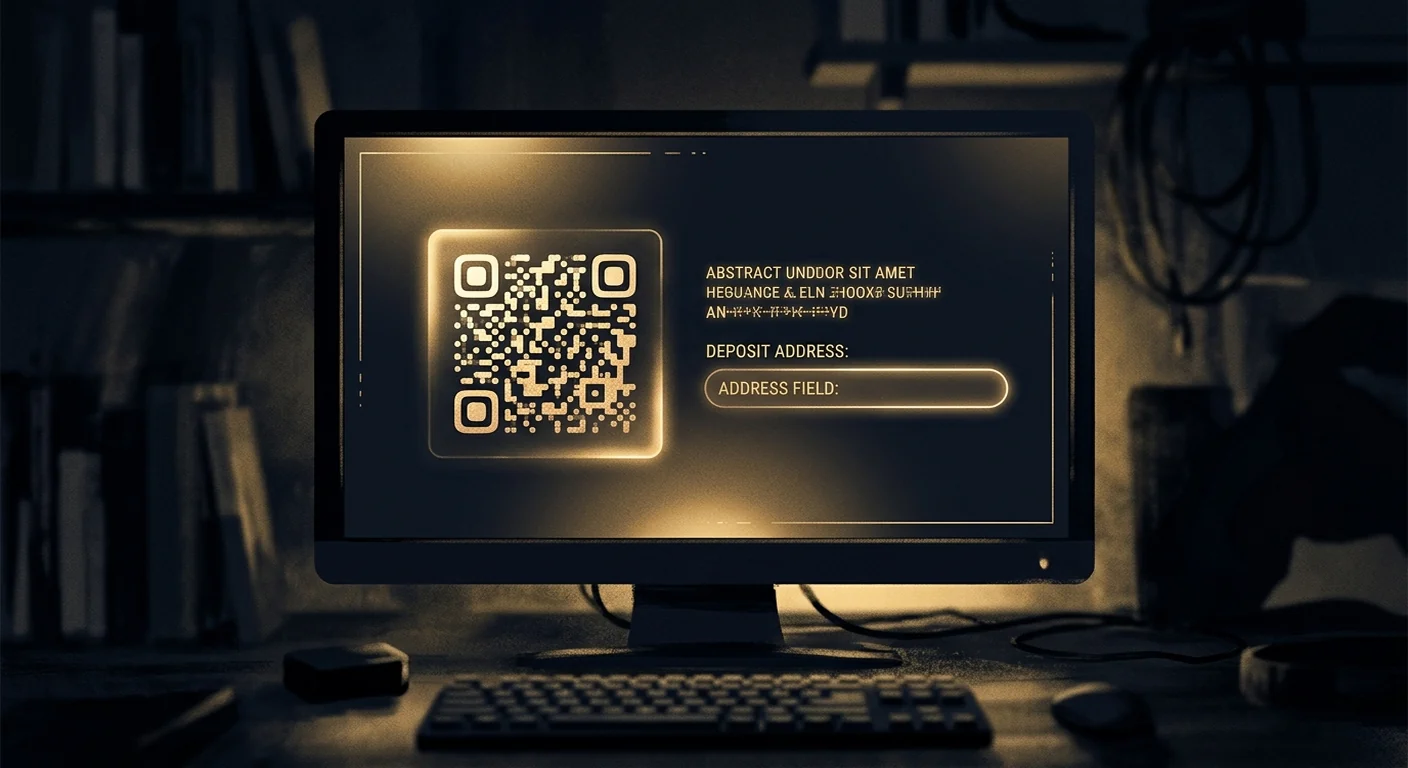
Ask the exchange, every time. A saved address may still work, but the exchange's own page is the only authoritative source.
The Short Version
- Find it under Deposit → Bitcoin → the network you intend to use.
- Bitcoin addresses start with 1, 3 or bc1. Anything else is a different asset or network.
- Most exchanges rotate addresses per deposit. Old ones usually still credit, but not always.
- Never use a Bitcoin address for Bitcoin Cash, Lightning or a wrapped token.
- If you sent to the wrong address or network, contact the receiving exchange immediately — recovery is sometimes possible, never guaranteed.
Where the Address Lives
The path is similar on every major exchange, with different labels.
- Open the Deposit section — usually under Assets, Wallet or Balances.
- Select Bitcoin (BTC) specifically. Not "crypto", not a generic deposit page.
- Choose the network. For Bitcoin this is usually "Bitcoin" or "BTC". If you see options like BEP-20, ERC-20 or Lightning, those are different rails and require different addresses.
- Copy the address using the copy button, not by selecting the text. Manual selection is where character errors come from.
- Check the first and last four characters against what you copied. This catches clipboard malware, which is a real and common attack.
Some exchanges also show a memo or tag field. Bitcoin does not use memos — if a Bitcoin deposit page asks for one, you are on the wrong asset or network.
The Three Bitcoin Address Formats
Bitcoin has three address formats in active use, and all three are valid. Knowing them helps you spot a wrong-network mistake before you send.
| Prefix | Type | Notes |
|---|---|---|
| 1 | Legacy (P2PKH) | Oldest format; higher fees |
| 3 | P2SH (often SegWit-wrapped) | Common for exchange deposits |
| bc1 | Native SegWit (bech32) | Lowest fees; increasingly standard |
Anything that does not start with 1, 3 or bc1 is not a Bitcoin address. An address starting with 0x is Ethereum-family. One starting with T is Tron. One starting with r is XRP. Sending BTC to any of those is a loss.
Bitcoin Cash addresses look similar to legacy Bitcoin addresses and this is a known trap. Always confirm the asset name on the deposit page, not just the address format.
Why the Address Changes
Most exchanges generate a new deposit address for each deposit, or rotate on a schedule. This confuses people who saved an address months ago and wonder whether it still works.
Why they rotate: privacy and security. A single static address links every deposit to one identity on the public ledger. Rotation breaks that link and makes chain analysis harder.
Do old addresses still work? Usually yes — exchanges keep old addresses mapped to your account so that late deposits are not lost. But "usually" is doing real work in that sentence. Some exchanges expire addresses after a period, and some deactivate them entirely.
The rule: always copy the address from the exchange's deposit page at the moment you send. Never reuse a saved address, and never use one a third party gave you.
Wrong Network and Wrong Asset
These are the two most expensive mistakes, and they are different problems.
Wrong network. You sent BTC on the Bitcoin network to an address that belongs to a different chain, or vice versa. The funds are on a chain the recipient does not monitor. Recovery requires the receiving exchange to import the private key or to run a recovery process, and many will not.
Wrong asset. You sent Bitcoin Cash to a Bitcoin address, or a wrapped BTC token to a native BTC address. Same problem: the funds exist, but not where the recipient is looking.
What to do: contact the receiving exchange's support immediately with the transaction hash, the asset, the network, the amount and the destination address. Some exchanges run a paid recovery process for wrong-network deposits. Many do not, and the funds are permanently inaccessible.
What not to do: send a "recovery fee" to anyone who contacts you offering to retrieve the funds. That is a second scam targeting exactly this mistake.
Verifying Before You Send
Four checks, thirty seconds, and they prevent almost every loss.
- Asset name on the deposit page matches what you are sending. Not just the ticker — the full name.
- Network name matches. "Bitcoin" is not "BEP-20" and not "Lightning".
- Address prefix is 1, 3 or bc1 for Bitcoin.
- First and last four characters match after pasting, to catch clipboard substitution.
For a large transfer, send a small test amount first and confirm it credits before sending the rest. This is standard practice among people who have lost money before, and it costs one extra transaction fee.
If You Sent to the Wrong Place
Act in this order, and act fast.
- Get the transaction hash from the sending wallet or exchange.
- Contact the receiving exchange's support with the hash, asset, network, amount and destination address. Ask specifically whether they run a wrong-network or wrong-asset recovery process.
- Contact the sending exchange if the transfer originated there. They cannot reverse a confirmed Bitcoin transaction, but they can confirm the details.
- Do not pay anyone who offers to recover it. No third party can move funds on a chain they do not control.
If the destination was a self-custody wallet you control, the funds may be recoverable by importing the correct key into a wallet that supports that chain. If it was someone else's wallet, you are dependent on their cooperation.
Questions people ask
Where do I find my Bitcoin address on an exchange?
Under Deposit → Bitcoin → the Bitcoin network. Copy it with the copy button and verify the first and last four characters after pasting. Never reuse a saved address.
Does my exchange Bitcoin address change?
Usually yes. Most exchanges rotate deposit addresses for privacy. Old addresses often still credit, but not always, so always copy a fresh one at the moment you send.
What does a Bitcoin address look like?
It starts with 1, 3 or bc1. Anything starting with 0x is Ethereum-family, T is Tron, and r is XRP. Those are different assets on different networks.
What happens if I send Bitcoin to the wrong network?
The funds exist on a chain the recipient does not monitor. Recovery depends on the receiving exchange running a recovery process, which many do not. Contact their support immediately with the transaction hash.
Can I use the same Bitcoin address for Bitcoin Cash?
No. Bitcoin Cash is a separate asset with its own addresses, even though the formats look similar. Sending BCH to a BTC address, or the reverse, is a common and often unrecoverable mistake.
Check the address before you send anything
A free scan reads public chain data in your browser: balance, activity, counterparties and flags. No wallet connection, no seed phrase, no signup.
Primary sources and further reading
- Bitcoin.org — Need to know — official guidance on addresses and transactions
- Bitcoin Wiki — Address — technical reference for the three address formats
- Chainalysis — blockchain analytics research on tracing
- OFAC Sanctions List — designated addresses to check against
Related guides
Information only. We never promise recovery.